In the Middle of the Ocean: Between Catastrophe and Miracle
This text is deeply personal, and difficult to write. Yet it feels like a reward in itself: because despite everything, all that has been lived until now carries meaning and value — and it is precisely for that reason that I am able to write these words.
What we long for often does not come into our hands. The love we expect, the closeness we seek, the touch we desire — when it remains unreachable, the first feeling that rises within us is worthlessness. As if we were unlovable, unseen, unheard. This feeling shrinks existence, weighing it down with its own shadow.
And yet, strangely, out of this very absence another space is born. The lack of something, however unwanted, lightens us. Fractures become sources of strength; rejection becomes liberation. For every freedom carries a price: the sacrifice of dreams, of affections, sometimes even of love itself.
At that threshold, courage appears. To be courageous can summon disaster — shattering, losing, burning. But it can also bring the miraculous — a rebirth, an unseen path, the opening of freedom’s gate. To dare to be courageous: this is the true cost of transformation.
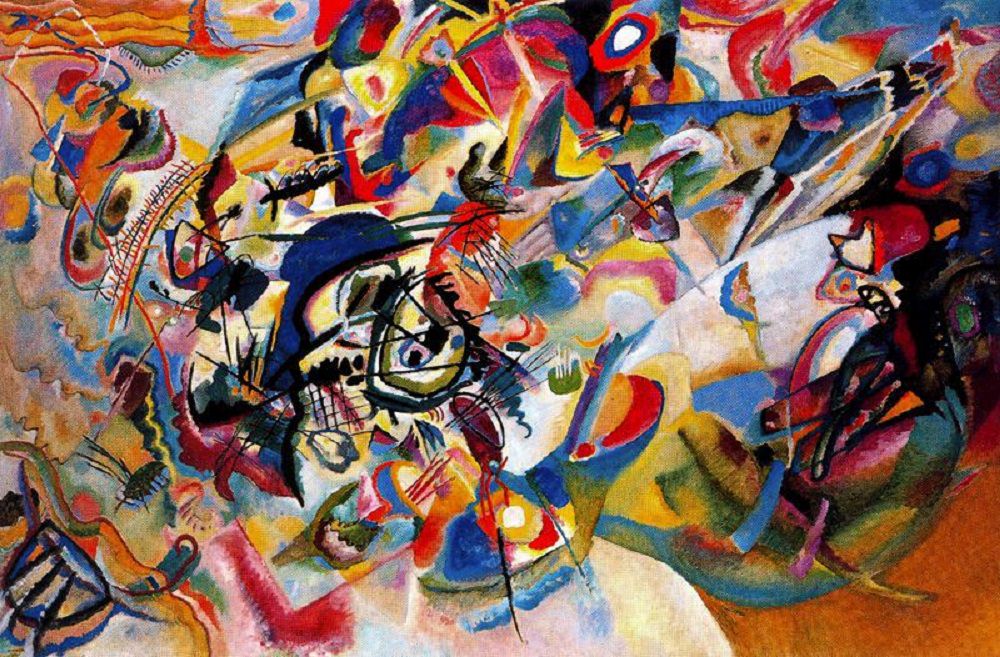
Here Wassily Kandinsky’s Composition VII (1913) comes alive. On the canvas, chaos holds both catastrophe and miracle at once. The violence of color, the rupture and recomposition of lines — it makes visible the dual nature of courage, destructive and generative. In Kandinsky’s storm of forms, as in life, freedom emerges from fragmentation.
We learn not to live what we sought, but what we found. What we find may not be as radiant as what we imagined; sometimes it is pain, sometimes solitude, sometimes acceptance. And yet, at the heart of sacrifice and courage, a new freedom sprouts. To be unloved drives one to self-love, to be left incomplete compels one to build wholeness, to be lost pushes one toward rebirth.
But still the question lingers: Is what we found — truly freedom?
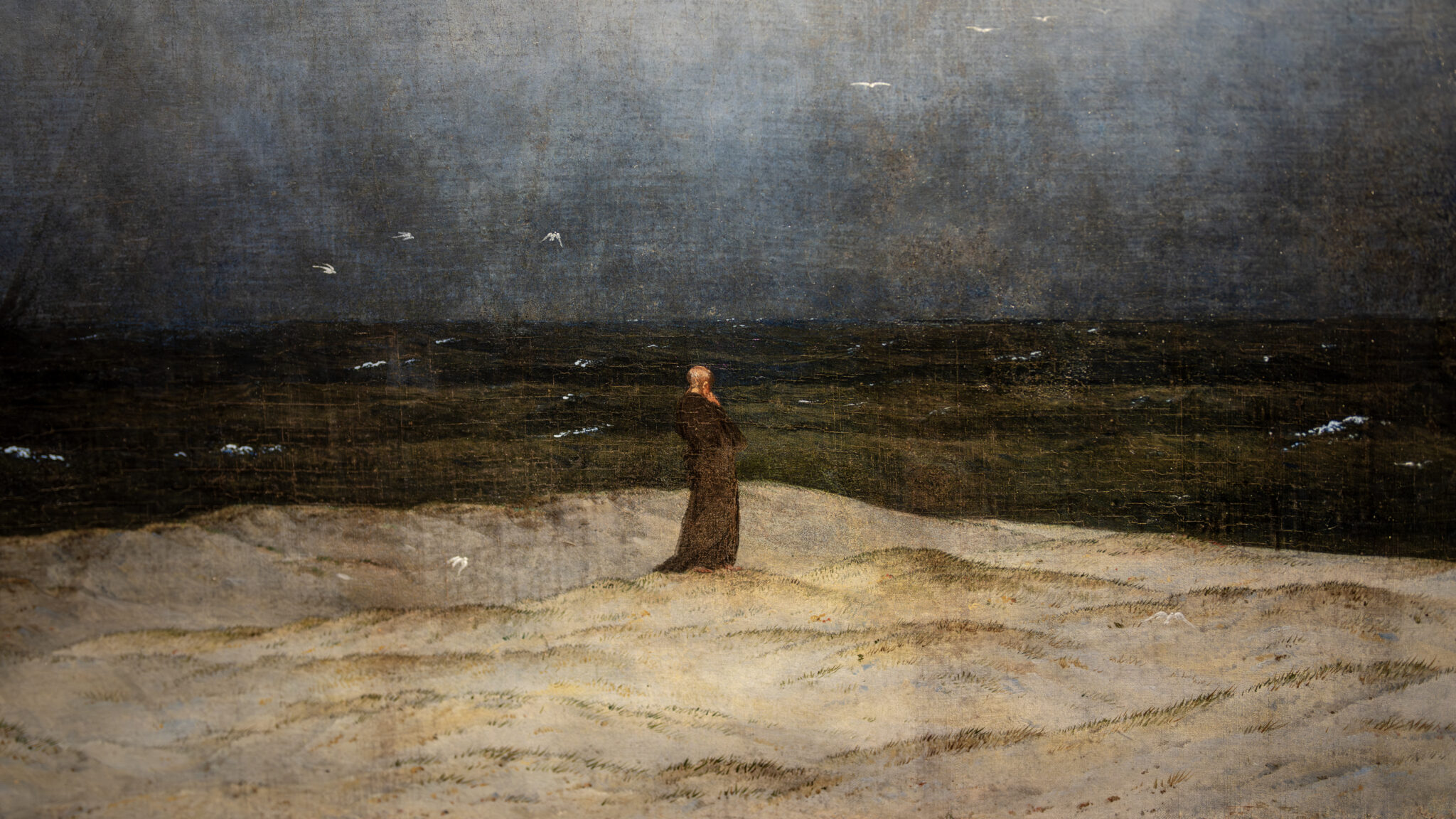
In the middle of the ocean, we are unchained, without boundaries; yes, nothing holds us. Yet with no other place to go, freedom is also entrapment. When we wash ashore, we may rejoice that we did not drown; but immediately the eyes turn to the horizon: will something come from the sea, will another possibility appear?This question finds its visual echo in Caspar David Friedrich’s The Monk by the Sea (1810). A tiny human figure faces the vast expanse of ocean, both free and alone at once. The painting makes palpable the duality of freedom: the joy of release and the weight of confinement.
Freedom is not a final destination; it is a constant tension. A rhythm that sways between the relief of survival and the heaviness of waiting.
Okyanusun Ortasında: Felaket ve Mucize Arasında
Bu metin oldukça kişisel, yazması zor. Ama aynı zamanda bir ödül gibi de: çünkü her şeye rağmen, bugüne kadar yaşanan her şey anlamlı ve değerli olduğu için bu satırları yazabiliyorum.
Aradığımız şey çoğu zaman elimizin altına gelmez. İstediğimiz sevgi, beklediğimiz yakınlık, özlediğimiz temas ulaşılmaz kaldığında içimizde ilk doğan duygu değersizlik olur. Sanki sevilmez, görülmez, duyulmaz biriymişiz gibi. Bu his, insanın varlığını küçülten, gölgesini ağırlaştıran bir yüktür.
Ama işin tuhaf yanı, tam da bu yoksunluk içinden bir başka alan doğar. Bir şeylerin eksikliği, istemeden de olsa, bizi hafifletir. Kırık noktalar güçlendirir, reddedilişler özgürleştirir. Çünkü her özgürlüğün bir bedeli vardır: o da hayallerimizden, sevgilerimizden, hatta kimi zaman aşktan vazgeçmektir.
Ve orada, bir eşik gibi karşımıza cesaret çıkar. Cesaret etmek bazen felaketi çağırır; parçalanmayı, kaybolmayı, yanmayı. Ama bazen de mucizeyi getirir; yeni bir doğuşu, görünmeyen bir yolu, özgürlüğün kapısını. Cesaret etmeye cesaret etmek — işte bu, asıl dönüşümün bedelidir.
Tam da burada Wassily Kandinsky’nin Composition VII (1913) devreye girer. Tuvaldeki kaos, felaketle mucizeyi aynı anda barındırır. Renklerin şiddeti, çizgilerin parçalanmışlığı ve yeniden birleşmesi; yazının söylediği gibi cesaretin hem yıkıcı hem de kurucu doğasını görünür kılar. Kandinsky’nin resminde tıpkı hayatta olduğu gibi, özgürlük parçalanmanın içinden doğar.
Aradığımızı değil, bulduğumuzu yaşamayı öğreniriz. Bulduğumuz şey her zaman hayal ettiğimiz kadar parlak olmayabilir; bazen acı, bazen yalnızlık, bazen de kabulleniş çıkar karşımıza. Ama işte tam orada, fedakârlığın ve cesaretin kalbinde, yeni bir özgürlük filizlenir. Sevilmemek insanı kendini sevmeye, eksik bırakılmak kendi bütünlüğünü kurmaya, kaybolmak yeniden doğmaya iter.
Ama yine de sorulmalı: Bulduğumuz yaşamak, gerçekten özgürlük mü?
Bir okyanusun ortasında, zincirsiz ve sınırsız kalırız; evet, hiçbir şey bizi tutmaz. Ama başka gidilecek yer olmadığında, özgürlük aynı zamanda kapana kısılmışlıktır. Karaya vurduğumuzda boğulmadığımız için seviniriz belki; fakat hemen ardından gözler ufka kayar: denizden bir gelen olur mu, başka bir ihtimal belirir mi diye.Bu sorunun görsel yankısı Caspar David Friedrich’in Der Mönch am Meer (Deniz Kıyısında Keşiş, 1810) tablosunda bulunur. Ufuk çizgisine bakan küçücük insan figürü, okyanusun karşısında hem özgür hem de yalnızdır. Resim, özgürlüğün sevinciyle kapana kısılmışlığın ağırlığını aynı anda hissettirir.
Özgürlük, kesin bir varış noktası değildir; sürekli bir gerilimdir. Kurtulmanın sevincinden, bekleyişin ağırlığına dalgalanıp duran bir deneyim.